Otherwise known as community supported agriculture.
A CSA is a partnership where local consumers buy a share of a farm’s harvest upfront, meaning that they recieve a proportion of the harvest (or the risk of poor weather or crop failure). This forward-funded investment enables farmers to grow their crops with the certainty of some financial stability.
Market gardens are a small scale commercial production of produce sold to consumers.
It’s 7am, the best way to beat the British heat in the driest summer on record.
It’s time to harvest the onions. Row by row we pull them out of the ground and fling them onto the grass verge, allowing them to dry in the morning heat.
The field is lined with red onions that had been pulled out the days previously.
Have you been to Bridge Farm? I am asked.
Quickly, I understand the network of the organic growing community.
A few weeks later, a visit to the Dartmoor Tea Farm, is quickly followed by, “are you a grower?”
A term which I was naively ignorant to a few months beforehand.
A grower is a person or company that cultivates plants, crops, fruit, or vegetables to sell. While the definition is simple, the meticulous process of getting seed to crop is a highly refined skill.
The Team
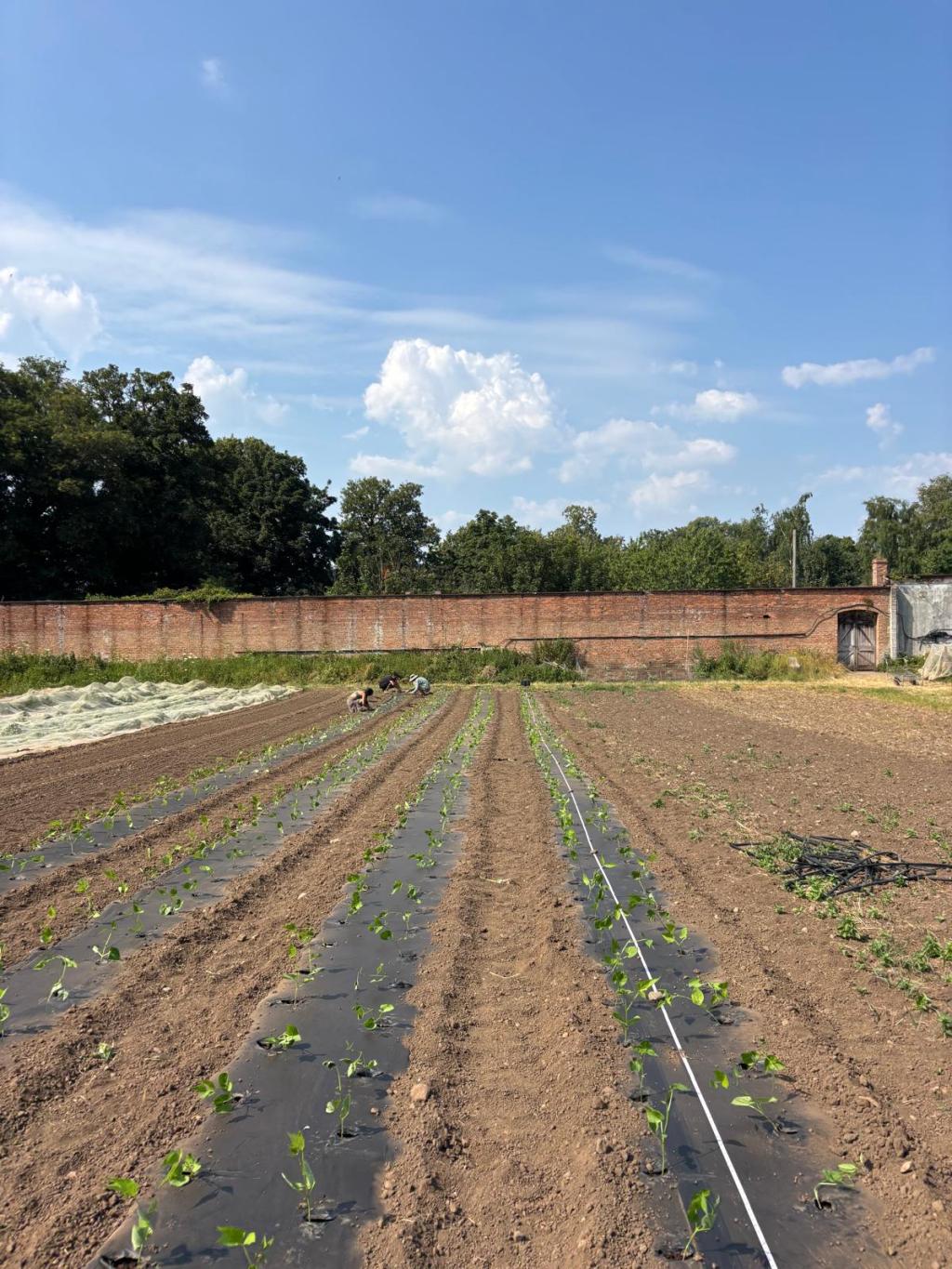
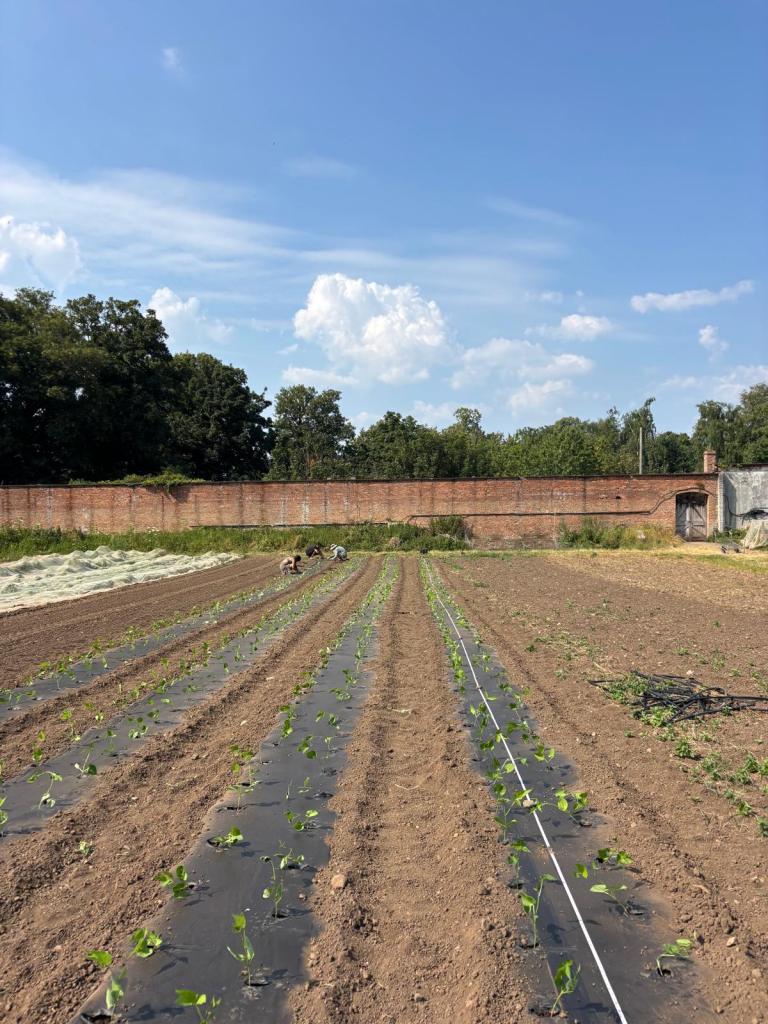
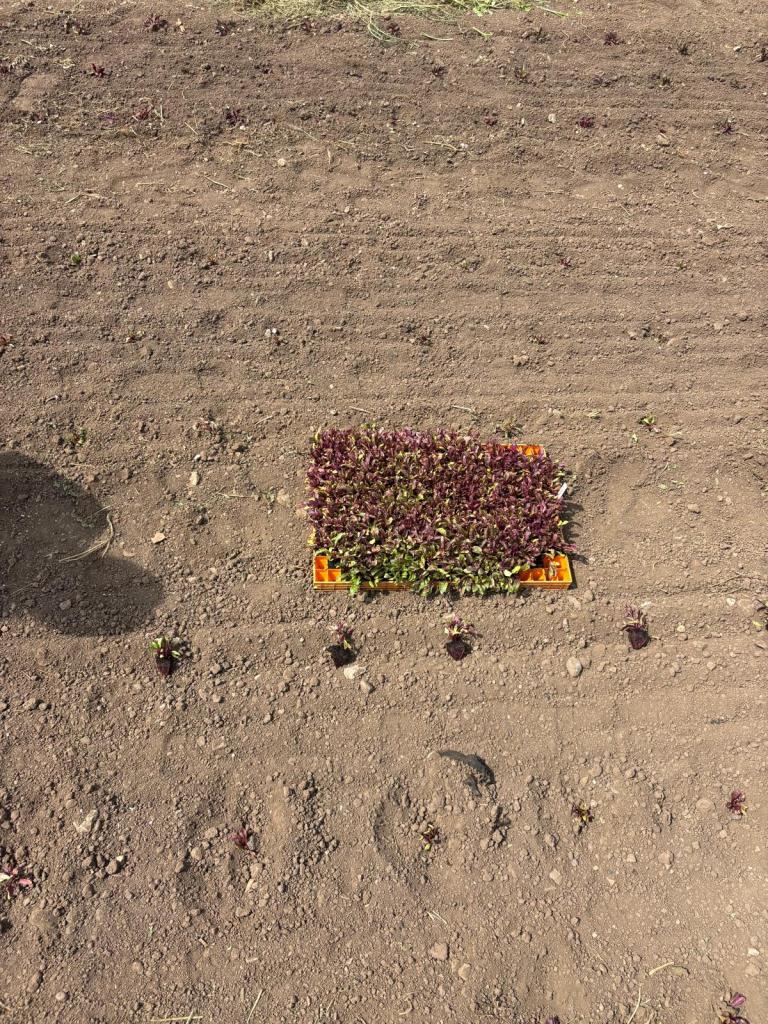
Hands to work, the team, a mix of paid staff and volunteers, gather to give these seedlings the best chance of growing for the year.
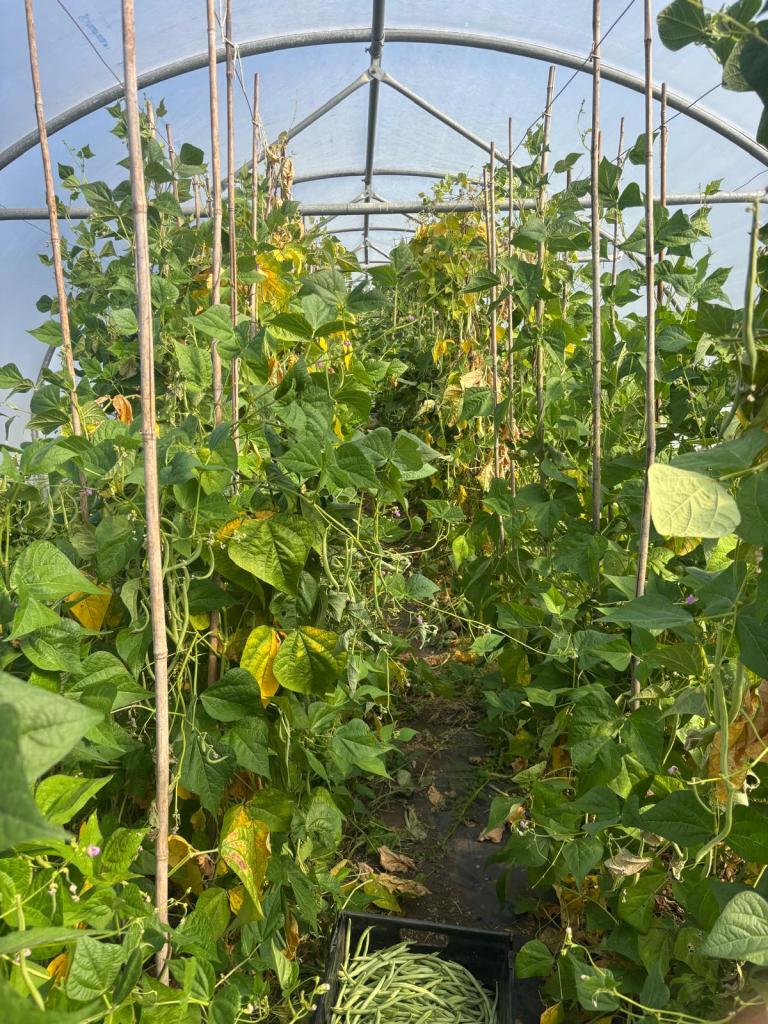
Caroline turns up to prune the flowers and bundle the sweet peas, Andy arrives and waters the seedlings, Martin starts bagging french beans for the market, there is a buzz in the silence of everyone’s meditative practice.
While removing all of the dying sweet peas, Caroline tells me, “we need to speak to the Mediterranean growers about what flowers they grow in the summer, but you look at the south of France or Italy and they are just barren at this time of year. I’m afraid it could be the same for us, apart from sunflowers.”
This was a reality shock, I hadn’t thought about it. I love seeing fields of daisies, wildflowers, camomille growing and what I hadn’t realised until this moment, is how much I take that sight for granted. How, maybe in a few years, I won’t see them at all?
“Will bluebells survive?” I ask desperately. Caroline is hopeful.
There’s chit chat in between, there’s years old stories being recounted with generational nostalgia and there’s inter-generational views on climate change, ecology, technology, language, culture. It’s a melting pot of people bound by their love for the outdoors.
People that value breathing in fresh air in the countryside. At lunch, everyone gathers around organic food cooked by a neighbour and delve into the fruit and vegetables that have grown around us.
This is not unique space. David tells me that in Croydon there are 700 people growing on their allotment in one single field.
The growing community is massive.
It’s a place where people walk in the soil barefoot, or sit on the ground rather than chairs at lunch. It’s where you quickly learn to have short fingernails and wear gloves or spend the majority of your days picking out bits of black that are embedded into every crevace of your finger.
Whether it be a CSA, a market garden, an organic farm, the funding and the model is different but the reason why people are there is similar.
Someone knows someone at a local CSA, who knows someone who volunteers at another market garden, it’s a trickle effect through the land surrounding the city.
A network of people that once you enter, it feels like you roll through the land around it.
These are open spaces, bound by the lunch time barn or the packing shed, where fruit and veg boxes are packed for customers in the local area.
People interact in a third space, a place that lets you leave and join without a grand appearance. Maybe it’s a peaceful tomato harvest or a dance to Spanish pop tunes being blasted out of the speaker as everyone packs the boxes to a Latino beat.
This is a community that really see the farm to table process, and are either there because of that or because they are here, they understand the food production system in the UK. The food waste, the labour hours, the machine, the challenges, the difference between what we can grow versus what we expect in our supermarkets. The conversations are fluid and once everyone has been involved for over two weeks, the shared concerns seem to connect everyone there.
The sad side is, as more greenbelt land gets bought for development, more CSA or veg box models fail to be commercially viable, these communities are getting smaller. Caroline will plant more sunflowers next year.
I am hopeful, with our ever-changing planet that the realisation of climate change will lead some people to reconnect with the land around us.
Get involved
You can find your local CSA here in the UK.


Leave a Reply