Manager: Koli Wanders
Turn right at the post, Koli says.
Through the white gates there’s a bustle of girls running around holding washing. There’s chickens chasing around an innocent blonde haired puppy, Ray. There’s never ending tiktok videos playing out of the room and there’s rows and rows of trainers drying in the sun.
We are for women, by women, Koli tells me.
In 2024, three women, Mary, Koli and Carolyne founded Nzima Heart Runners, alongside Alistair Davidson and Peter Aburi.
Nzima is the only all-female running camp based in Iten. Mary, Koli and Carolyne were all close friends of a former female elite athlete and medallist who was killed 5 days after her victory. All born in Iten, the women have witnessed many female athletes who have been victims of gender based violence.
Four in ten women in Kenya have experienced emotional, physical, or psychological intimate partner violence (UNESCO, 2025).
The most recent high profile incident was Ugandan athlete Rebecca Cheptegei who was doused in petrol and burned by her boyfriend in Kenya, where she trained.
In the past they saw the signs. They were unable to stop it.
Now, Mary, Koli and Carolyne are doing something about it. One girl at a time.
This camp is “for women, by women” and the goal is not only to support the very best into their elite career but also to show women that there are other opportunities: education, welding, salon work. Whatever they want.
Some women come with their children, some come alone.
Both are welcome.
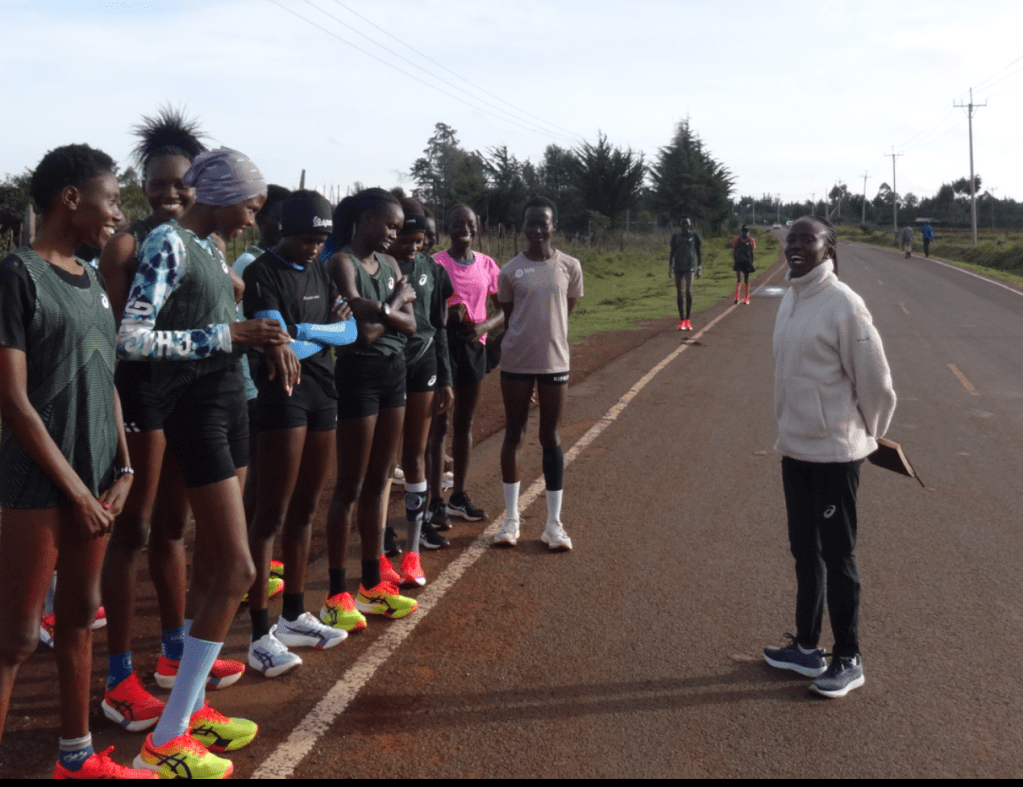
Koli’s philosophy is that you can’t change what is happening at the top, where the elites are already too well known for anything to change, but you can change where there is smoke and do something there.
As the only female coach in Iten, Koli is driving the change. Tackle GBV from the grassroots. Teach girls how to handle their money, how to have their own bank account, how to bring money to the table equally in relationships.
With pressure is when the biggest risks and challenges emerge. With pressure can come desperation: doping, gender based violence, anything to win and to make families proud, she tells me.
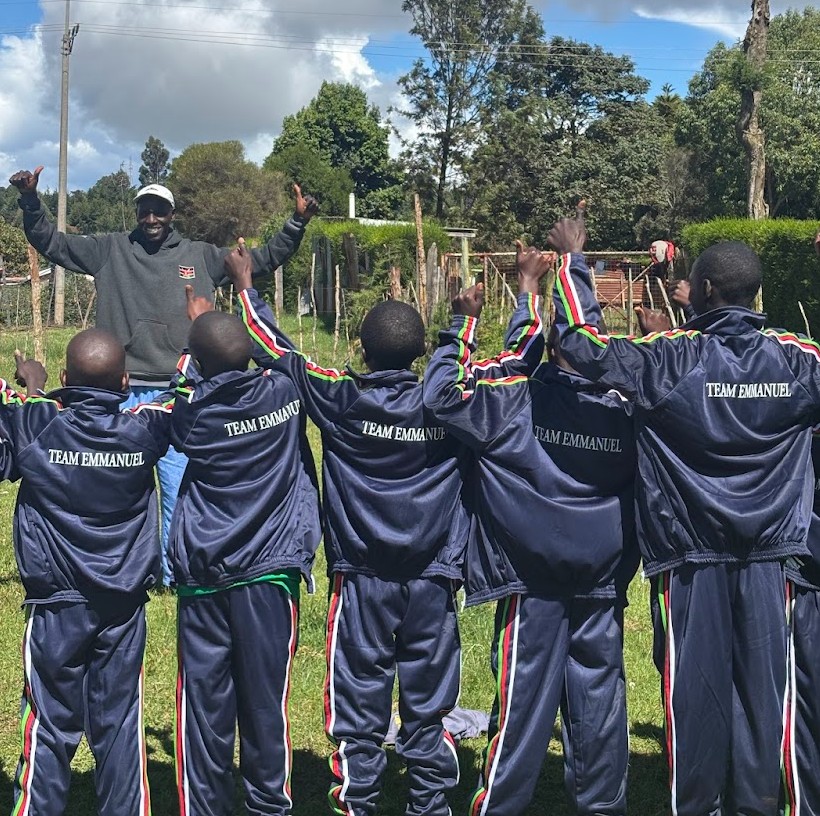
Hosting a camp, where 24 girls aged 15-29 live every day, gives Koli and the team the ability to tailor the programme exactly for what these young athletes need to thrive.
Mentorship and education is a huge part of that. Madame Gertrude holds mentorship sessions every Friday.
Claire lives at the camp day in day out.
Irene is smiling from the kitchen, making 100 chapatis (!) every Tuesday and Thursday, as well as gueri, ugali, chai; keeping everyone fueled.
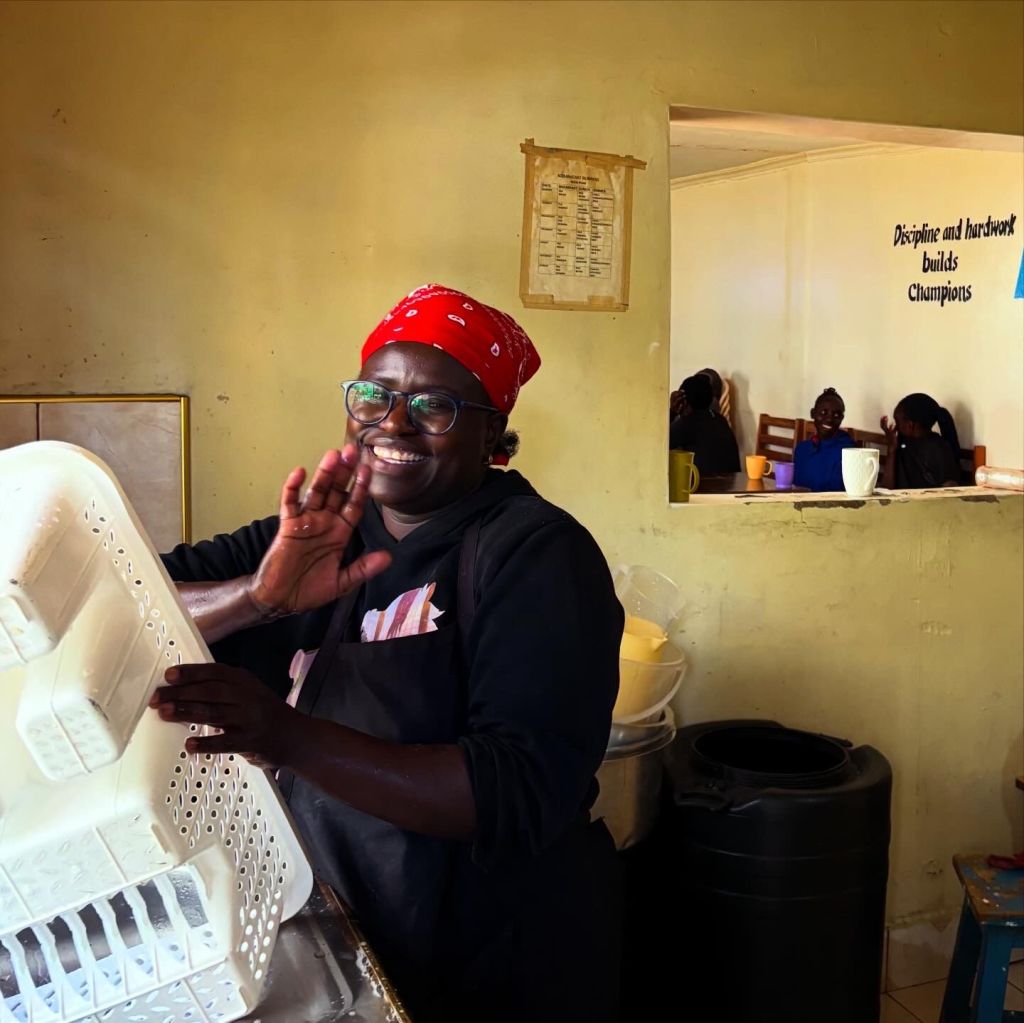
Sunday the girls have a rota which determines who cooks, a part of their duties.
Sometimes, there is a scream and laughter bouncing through the camp walls as someone runs around juggling their training clothes. Koli explains that this athlete is marathon training and has three kids but refuses to buy a washing machine because they aren’t sure if they are responsible enough for it. That’s what they have to learn, Koli says.
Life in an Elite Camp
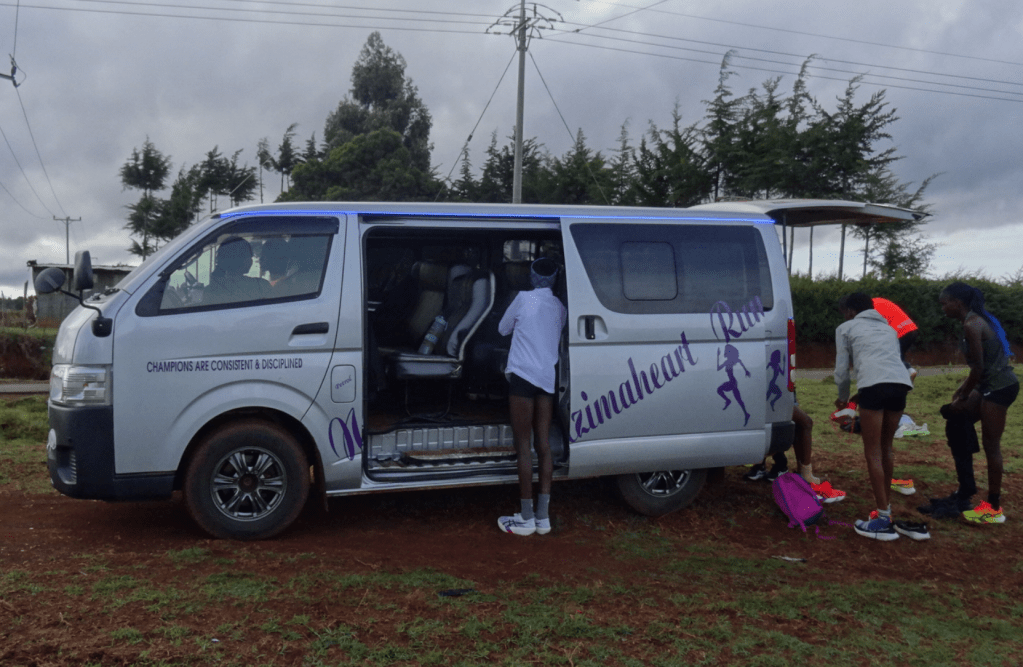
The morning starts at 6:30am to the BEST Kenyan playlist as girls changing out of their tracksuits into their fartlek training kit. Claire films the dance moves, giggling over the rustle of water bottles being thrown to the front, coats layering up the seats in the van.
When it comes to training though, it’s serious.
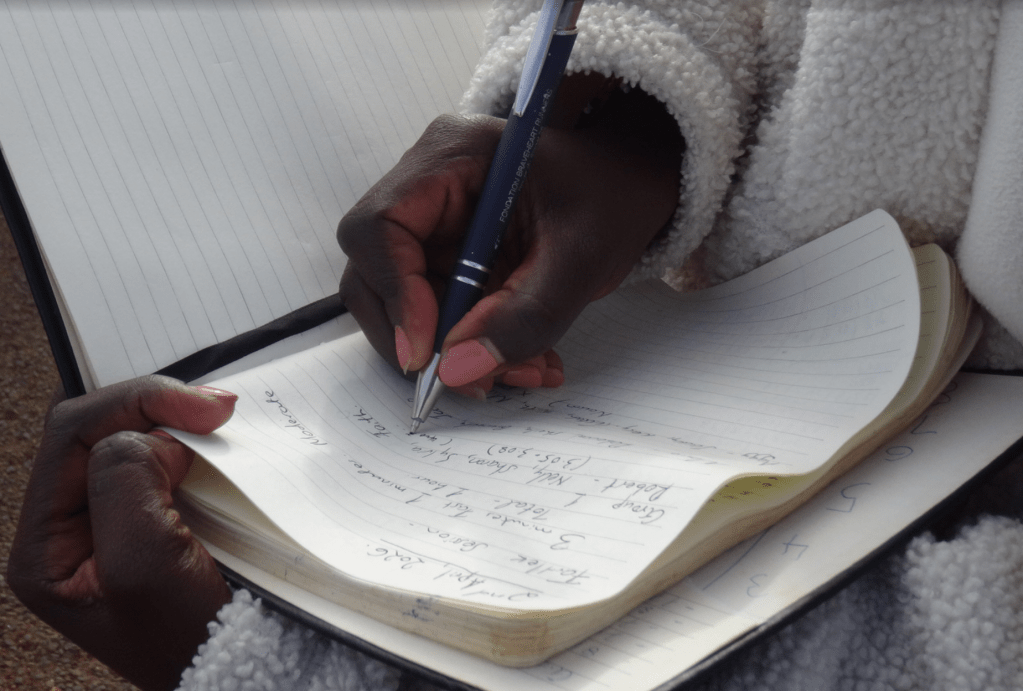
This is fartlek, not a long run, Koli tells the girls.* At 3:20 min/km pace, she’s not joking.
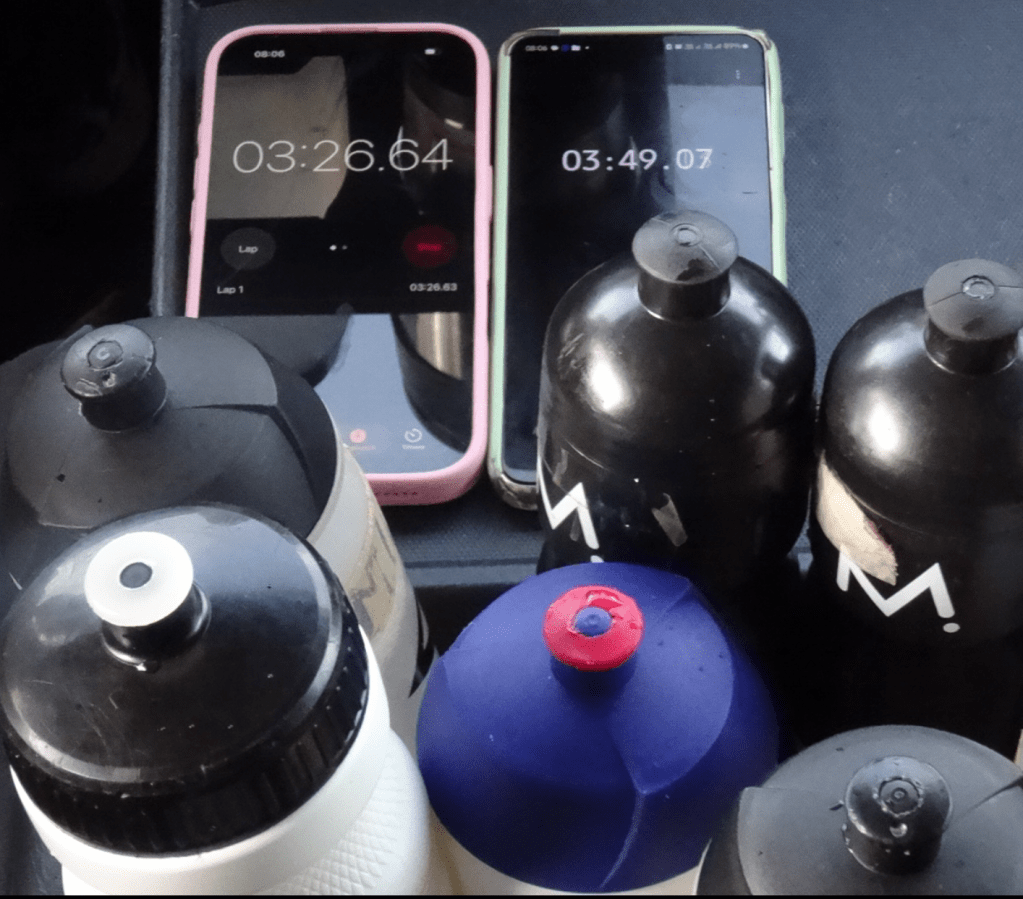
3 min at 3:15 min/km, 1 min off at 4:20 min/km.
The car crew are in charge of beeping the horn at every interval. 24 water bottles labelled with different names. Two phones running the clock. Check the pace, check the time, check the number of intervals, check the water bottle.
Waterbottle hand over. Waterbottle pick up.
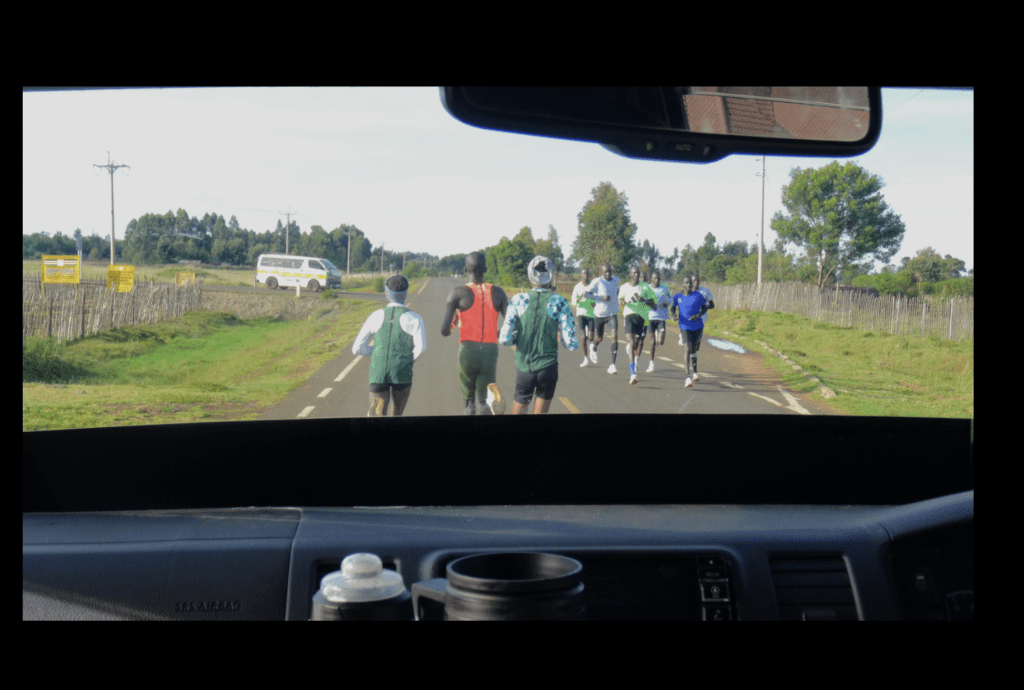
The session is over.
A light 17km for the girls.
Everytime the pace is announced, there are nerves, Koli tells me. The pace used to stay quiet but there’s a race in France in 2 weeks and everyone needs to believe in what their body can easily do. They have it in their bodies, now they need it in their minds.
Education through Running
Access to the camp gives the girls access to weekly mentorship. Mentorship supports their minds.
It’s Friday afternoon. Madame Gertrude arrives and the girls file in, notebooks in hand. Gear for excellence is today’s phrase.
Last week it was friendship: the 4 different types, acquaintances, casual friends, close friends and lifelong friends. A lesson in boundaries, how to notice good and bad friends.
Today, gear is the most important word, Madame Gertrude tells the group.
When you go up a hill, do you go fast or slow? Fast. Slow. Fast. Slow. Fast. Slow. Fast. Slow. The answer is muddled.
She takes a step back to the silent and confused room. How many laps is 800m? 2, the room replies immediately. Now, when you start going up a hill, do you go fast or slow? Slow. Yes, slow, and then halfway there’s momentum, and it gets quicker.
A very poignant metaphor for the path of excellence for these elite runners.
We have to know ourselves, Gertrude tells the girls. We need to know our weaknesses, to build on them, to tailor excellence to what works for us.
Can you describe yourself? Madame Gertrude goes around the front row, eye contact is avoided on all fronts.
We have to know ourselves. If we come back from a race, the feedback will either be positive or negative, we have to know why.
We can’t get to the end of the run and say, Oh I don’t know why it didn’t go well, Where were you then? You ran it, you must know! What were you thinking about? What were you distracted by? Why did it not go well. The same if we win, why did we win? What was it that helped us win?
We have to know ourselves for excellence, Madame asks the room. Who are you? She asks.
Around the room the girls go, one by one. I am short tempered. I like jokes. I like my own company but I also like socialising. There is power and confidence being built in this room.
The lessons of today: Gearing for Excellence.
- In everything you do, consistency breeds excellence. We have to be flexible, be flexible in our minds.
- Learn from challenges, challenges is a time to show you’re in a position to overcome an obstacle.
- Failure as a learning experience: fail, accept, learn.
- Believe in growth, aspire to grow.
- No deviation, make a positive mark against everything. If there is a deviation, what is my deviation? The question an elite has to ask themselves.
- Develop emotional intelligence and master your talent, know ourselves to master our talents.
- Establish routines, you are what you do.
- Surround yourself with greatness to unleash your greatness (“tell me your friend and I’ll tell you who you are”)
- Live with integrity: do what it is that ignites your soul.
- Find mentors and role models for constructive feedback, if it’s not constructive, they are not a role model.
- Grow 1% every day.
- Give more than you take.
- Eliminate bad apples.
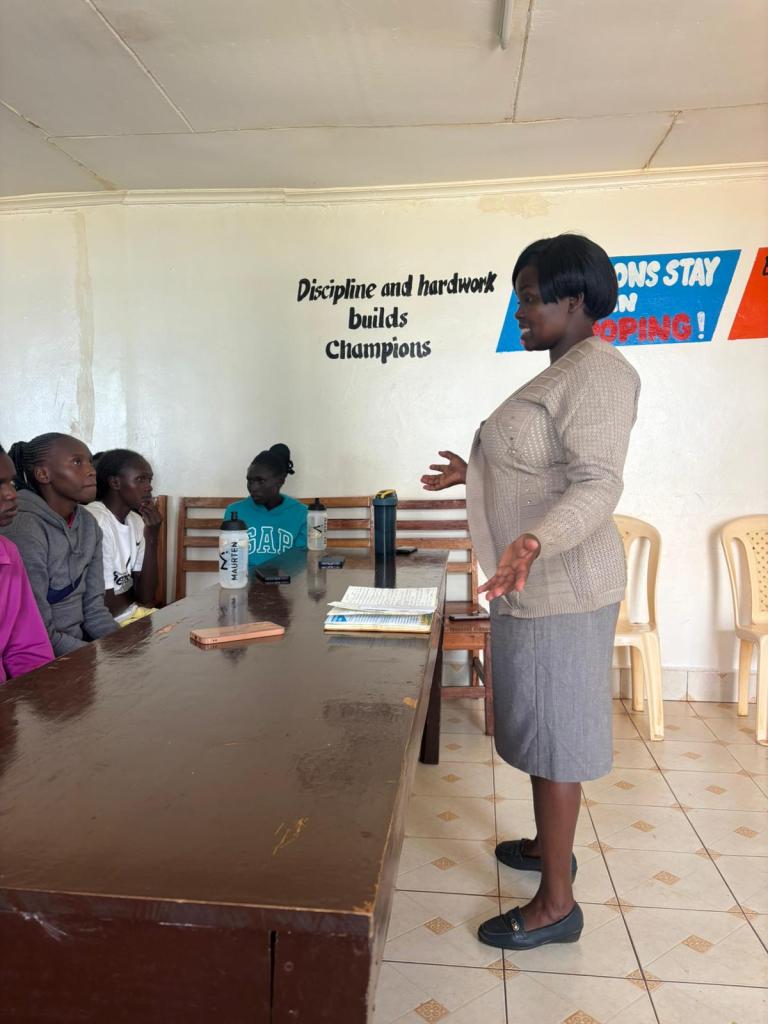
These sessions land beyond the walls of the room too. Afterwards girls sometimes come to Madame or the camp staff with situations, asking for guidance. Very quickly the issue is resolved.
Crying over the race
These girls are the breadwinners for their family. Turning up to that race is more than a new PB or record, this is their career.
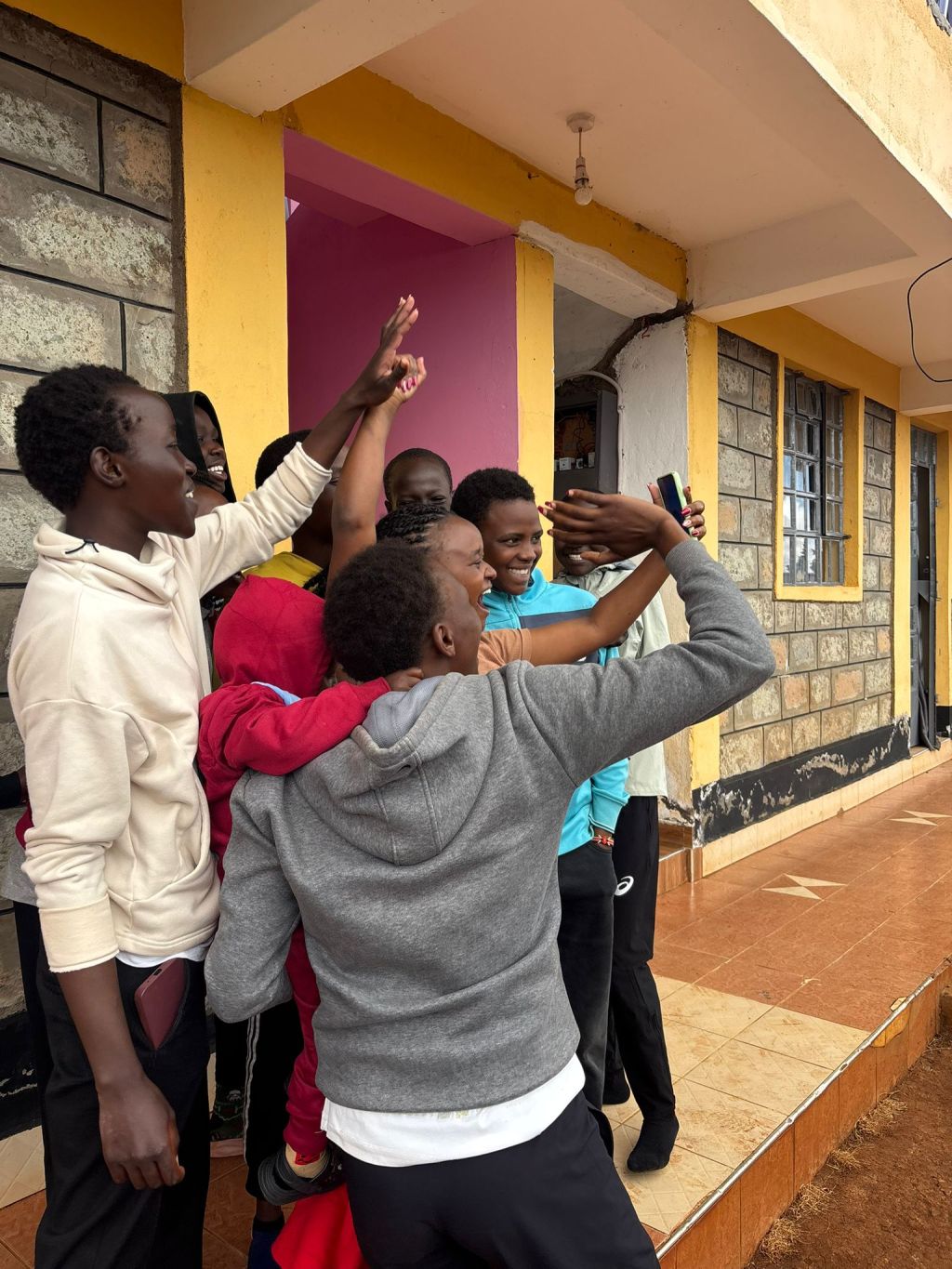
We sit down to watch the Brooks Annecy Half Marathon. Three girls from the camp are racing the 21km. The sofa becomes a huddle of friends; screaming, punching the air, tied up with anticipation. Three girls from the camp are racing the 21km.
What does it actually mean to win there?
Just like that, Sylvia, Faith and Sharon come in 1st, 2nd, 3rd.
Sylvia breaks a course record.
As Faith crosses the line, Jackie cries next to me. They joined the camp at the same time.
Everyone can feel the accomplishment, the relief and the incredible achievement of their colleagues.
It prickles the hairs on my arms and screaming that quickly deafens my eardrums.
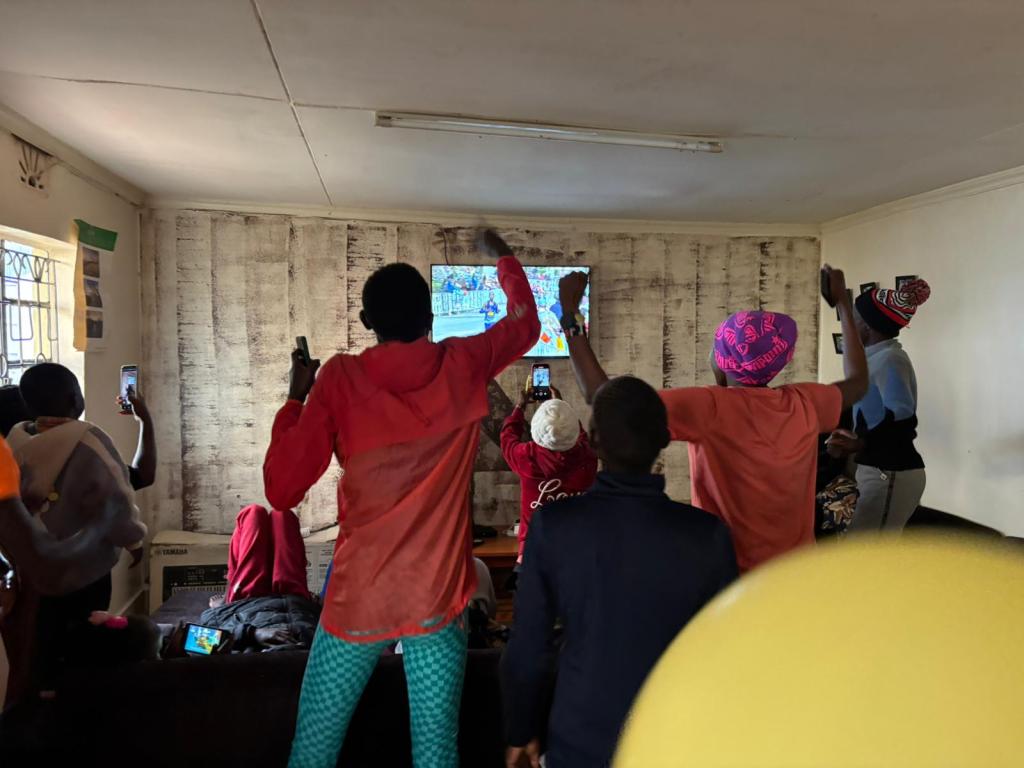
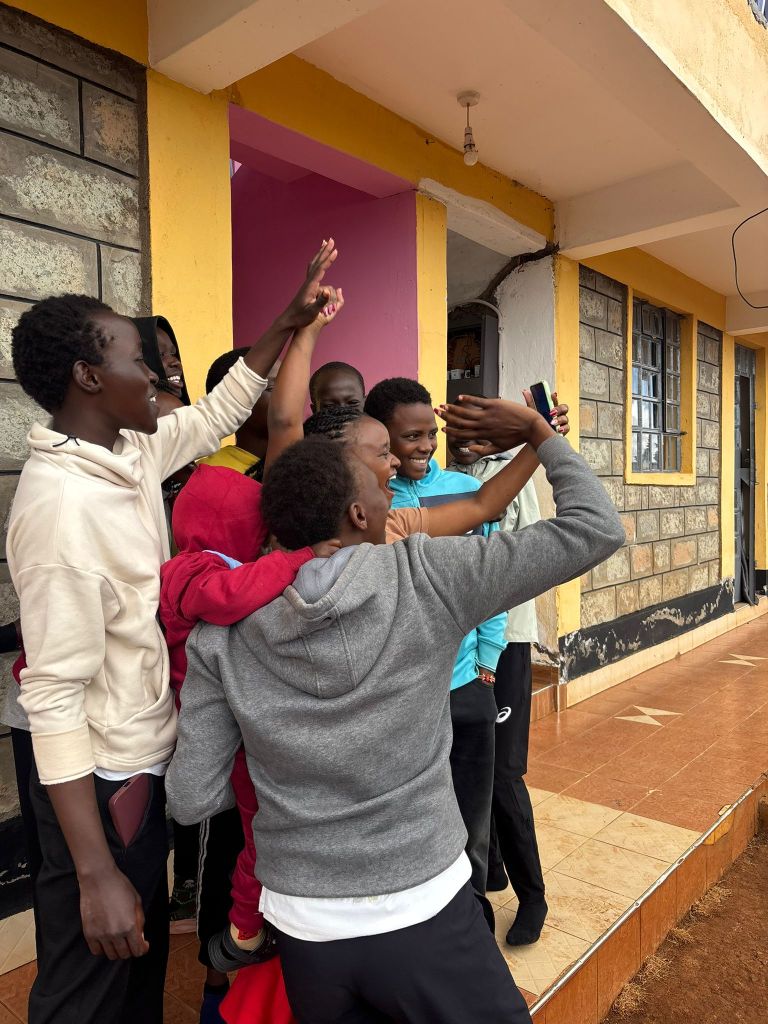
As everyone hugs and cheers, the video call is made, cheering, smiling and virtual hugs that prove the connection these girls have.
Competitors, of course, but team mates, strong friends, common challenges, drive and desire to win. The girls won in Annecy; here in Kenya, their support is undeniable.
What’s next for Nzima?
Going forward, Nzima want to create a future that continues positively impacting women and girls. Their two principles, education and running, are the threads that run through all of their programmes.
There’s music, there’s education, there’s some great tiktoks, there’s a puppy that is terrified of chickens, there’s also consistency, discipline and determination.
Koli and the team at Nzima Heart Runners are doing things differently.
*Mary Keitany is the official coach, currently on maternity leave.
Follow Nzima on Instagram: @nzimaheartrunners
Copyright: Emily Colquhoun


Leave a Reply