Known as the spiritual home of champions, the reasons for which have been covered and documented by people all across the world.
Many have traveled to the infamous, Home of Champions, Iten. Their goal? To uncover the best kept secrets of the Kenyan athletes.
Running in Iten shows the meaning of a real running community unlike any Wednesday night run club across the world.
Collective Motivation
Back to the junction, a crowd of over 70 runners are gathered all listening to one man, beckoning a speech full of power, of motivation and of engagement “2026 is the year […] we are escaping poverty […] we make our families proud […] 2026 is the year.”
That one man was the pastor.
Everyone says grace. The large group pray for the year ahead.
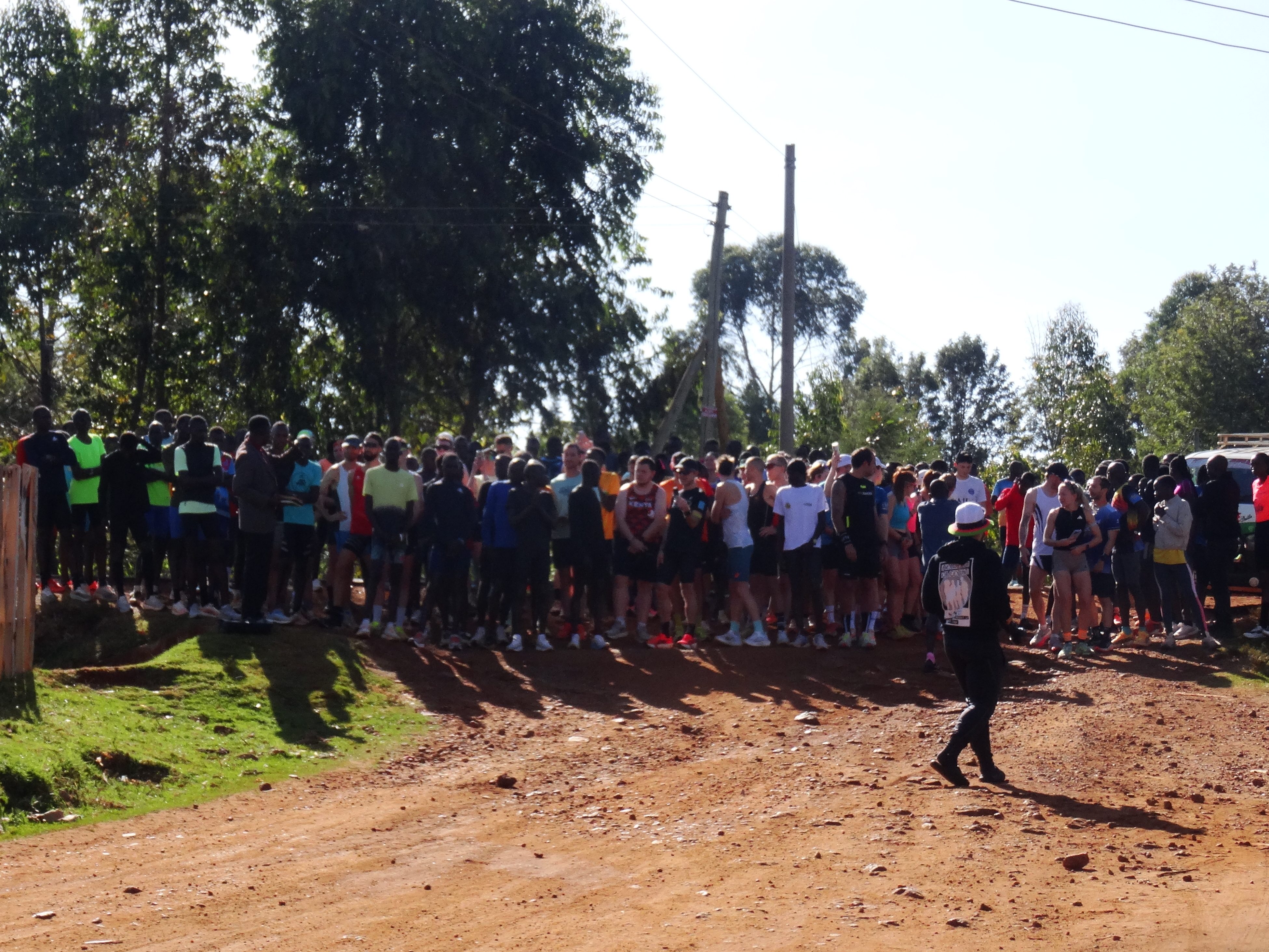
Copyright: Author, Emily Colquhoun
I was overwhelmed with goosebumps. I could see it in the eyes of everyone listening. I could hear it in the power of the coach. I could hear it in the confidence he speaks with. I could feel it in the silence and the respect that the audience holds.
Running is a lifeline here, movement is a lifeline. Seeing this group of runners gathered on a Tuesday morning listening intently to a moving speech by an admired man, I was speechless.
With running there is an opportunity.
Everyone was gathered closely.
Cafe: The Knowledge Hub
My boda (motorbike) driver, Isaac, took me to the local spot for the best chapati and beans in Iten, he told me. He was right.
The rotating door of regulars proved that I had found the hidden spot. A couple of guys sat next to me and we discussed how chapati and tea is the most popular item on the menu. Everyone arrives before they run, at 6 or 7am, he tells me.
Soon, I started hearing stories. Stories that intertwine a net of people with shared centres, pulled together through the power of movement, the opportunities given by movement and the dedication that movement forces.
My new favourite food place.
Vivienne being rushed off her feet, Kiprop working hard in the kitchen.
This place has the highest turnover I have ever seen.
Most people come alone, they grab a chair. They see someone they know, they have a chat.
I grab a chair at a table.
Welcome to Iten, a guy opposite announces.
That guy was Isaiah Kosgei. He introduces me to half the restaurant, “this guy”, he says, signaling an introduction between us, “he runs a 27 minute 10km at 22 years old, he runs a half marathon in 59 minutes.”
“Not 1 something, not 2 something” the young 22 year old proudly tells me. He trains twice a day, every day.
People are introduced by time and dedication to their goals. Everyone chats like we are in a sports team changing room. Times, ages and names are known.
I am quickly interviewed on who is my biggest inspiration while around me the names of world champions from every country rolled off the tongue like an alphabet.
Kanini Superstar: Anthems for Champions
A young man sits down and soon after his friend says hello to me.
His friend is a musician.
Kanini Superstar writes songs and videos about Kenyan athletes. So far, he has written songs for stars such as: Faith Cherotich, the Olympic Bronze Medallist for 3000m steeplechase; Daniel Ebenyo, the World 1500m Silver Medallist and World Bronze Cross Country Medallist and John Korir, the 2024 Chicago Marathon winner. Think of it as a personal anthem.
In over a year, Kanini Superstar has created a multi-channel following of 4,000 subscribers, with his top video getting 14,000 views.
He comes from Kericho County and travels 160km to the Rift Valley to meet the athletes, where his music has built such an interest that he is now receiving personal requests from runners’ to write songs about them.
Kanini Superstar uses crowdfunding to record his pieces in the Eldoret recording studio. No label, no brand sponsorship, just community members chipping in for songs that matter. What he is creating here is music for the community, music as a part of the personal branding of the athletes who are training here. (Find his music here!)
Running is empowering a culture, it is the centre piece of this region.
Lucas: Veteran’s Visions
Lucas Rotich sits next to me. It’s the kind of moment where you recognise a face so well. Yet, you are not sure exactly where and when you have seen it before. So, I sit in a naively manner and ask what distance he runs. The coach to my left says, he’s a marathon runner.
A marathon runner for 15 years.
Lucas Rotich came 2nd in the Amsterdam Marathon in 2014, won the Hamburg Marathon in 2015, won Otsu Lake Biwa Marathon and came second in the New York Marathon in 2016.
How have you kept your body so well for so long? I asked him.
No beer, the coach to my left jokes.
That is part of it, he says.
One fizzy bitter lemon in the day is better than having a beer.
In all serious, he explains. It’s discipline.
A teacher has discipline, they don’t smoke in front of children and they wear appropriate clothing.
An athlete has discipline; we train and we don’t come here to get a chai and start screaming at someone.
Discipline.
Lucas, like many veterans I meet, talks about plans, play areas, schools and sports facilities for the next generation.
It is stark that many athletes who have won titles and top positions across the world are here working out how to bring back money and opportunities to the community that they have grown up in. The conversation circles back to the funding. Donors.
Donors are needed to raise enough funding to build these facilities and it is this blocker that is halting many dreams of the veteran athletes.
It’s a common refrain I’ll hear throughout my time here. Which makes Faith Kipyegon’s recent announcement of a Nike-supported maternity facility in Keringet feel significant, a rare example of investment flowing back into the community that creates champions. Maybe this is a positive shift to brands co-creating with talent rather than extracting from talent.
Oliver: The Connector
Drivers whizzing past, picking up deserted runners who face the 600m climb from fartlek training back to their Iten accommodation.
Sometimes you meet someone like Oliver, who within 3 minutes finds you accommodation through his friend, tells you which runners are in town, knows where everyone lives, tells you the best places to eat. A tour guide yet boda boda driver.
Soon, Oliver tells me where Beatrice Chebet lives. He tells me how she is a friend. She is a great person. She will be walking around and chatting with you. Oliver is the kind of person you trust within a moment. The kind of man who helps everyone out from the goodness of his heart.
He tells me that at 28 years old he cares for his two younger sisters, now 16 years old. He took out a loan to buy a motorbike, this motorbike has given him the ability to earn money as a boda driver to pay his sisters’ school fees. His focus? For them to get an education.
They are interested in running, they want to run but he is adamant they must get an education while running.
Oliver has runners ringing him every 2.5 minutes, friends from Germany, Canada, Spain, Netherlands, UK. He believes if you are an honest person, that is the most important thing.
These are people he initially meets on a maximum 10 minute motorbike ride. His warmth and kindness means that his number is the number that is given out by guesthouses and local training centres to athletes.
In the 7 years of riding in Iten, he has built a reputation. Often found following athletes with water bottles on their 40km run under the Kenyan morning heat, Oliver is the network piecing together different sides of the running community here.
Repeat visitors to Iten text him before they arrive, preparing him for their stay and booking in their trips.
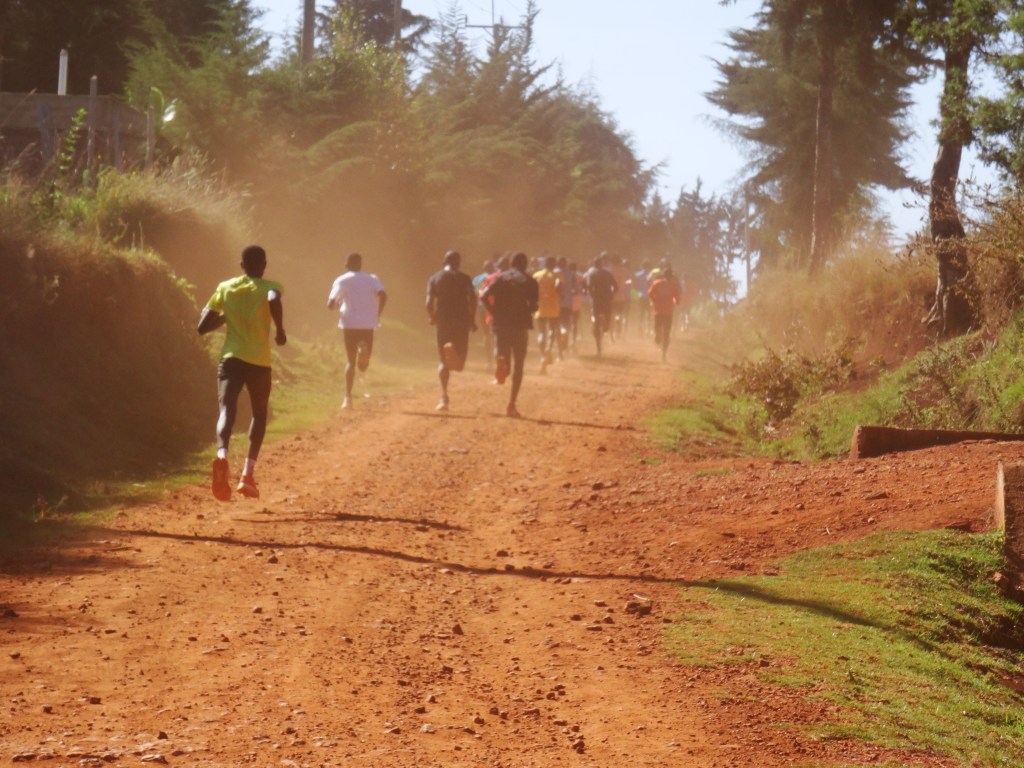
Photo Credit: Author, Emily Colquhoun
Interdependence as strength
Only 5km? I gasp as my watch tells me a different reality to my body. Luckily at 7km, I meet Beatrice.
She is running at a gentle pace on the side away from the groups that come past in a sound like a herd of horses pounding down a race track.
Today is Day 1 of Beatrice’s training.
The last time she ran was in November. 2 months to reset her body and now she is back. This week she runs 10-12km every day before the concentrated training begins next week ready for her season opening in February.
A marathon runner since the age of 19, Beatrice was inspired by the elite athletes around her in Nakuru competing on the world stage. Now, she tells me, she needs running to stay well. Sitting around makes her sick. Having spent 3 years in Germany training, she came back to Kenya at 22 and has competed across the world.
At 43, she is easily outpacing me, the “sprightly” 27 year old. I am shocked when she tells me her age.
Suddenly I forget that we are running uphill at 2500m above sea level.
“You have to know everyone if you are an athlete”, she tells me in between waves to fellow runners that cross us. “The community here is so important, you need to know everyone when you are a runner because you are always running with each other.”
We go running at 5am tomorrow morning, I am informed.
How far?
22km.
Yes, 22km.
Right then.
It’s 4:45am. It’s dark. Here I am in Iten and I didn’t come here to stay in bed. I came here to run.
I get my shoes on as I set out on another day of understanding what the running community really looks like.
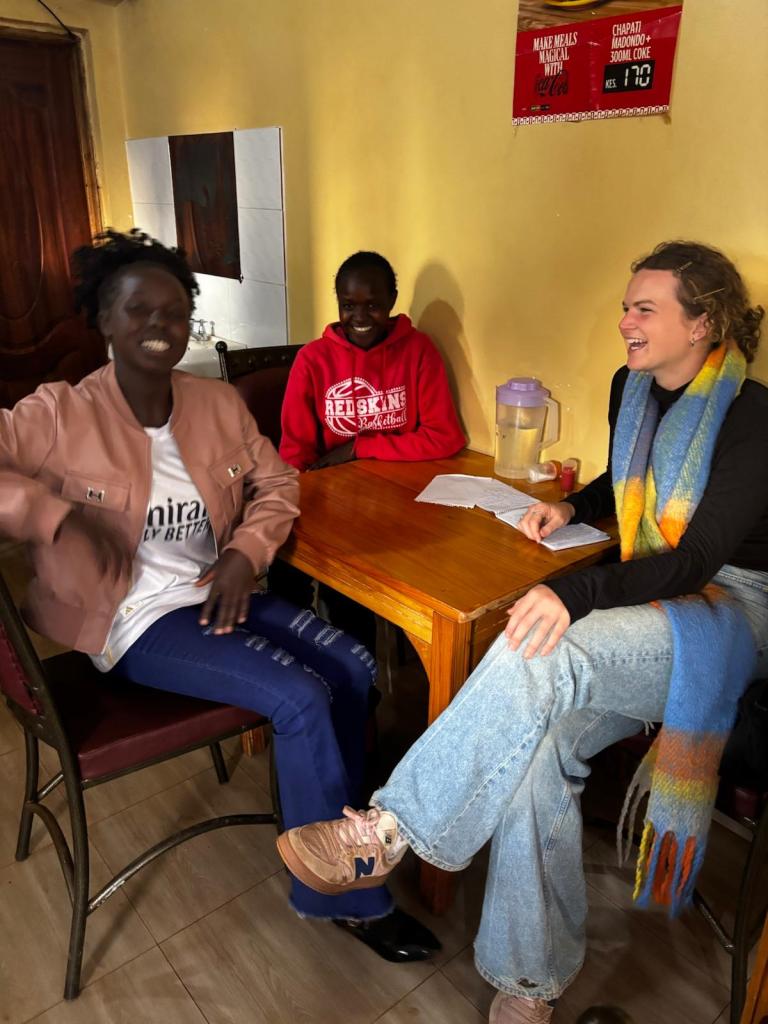
Photo credit: Author, Emily Colquhoun
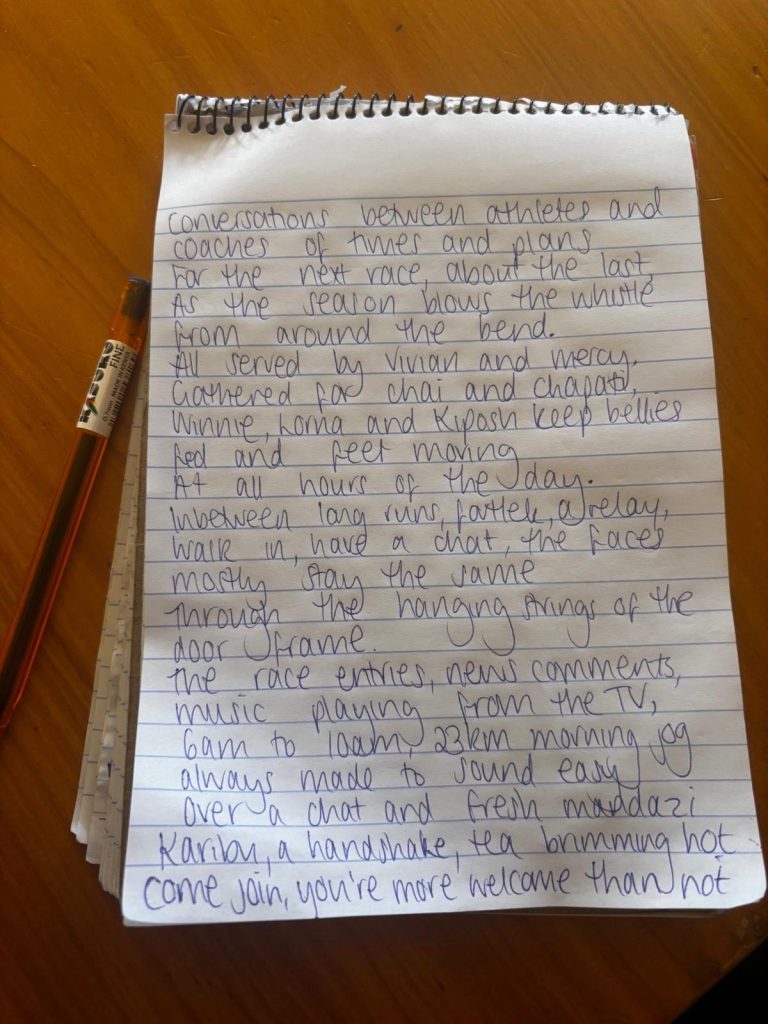
Turning Tables of Chapati
Conversations between athletes and coaches of times and plans
For the next race, about the last
As the season blows the whistle from around the bend.
All served by Vivian and Mercy,
Gathered for chai and chapati,
Winnie, Lorna and Kiposh keep bellies fed and feet moving at
All hours of the day.
Inbetween long runs, fartlek, a relay,
Walk in, have a chat, the faces mostly stay the same
Through the hanging strings of the door frame.
The race entries, news comments, music playing from the TV
6am to 10pm, the 23km morning jog
Always made to sound easy
Over a chat and fresh mandazi.
Karibu, a handshake, tea brimming hot,
Come join, you’re more welcome than not.
 the community project
Leave a comment